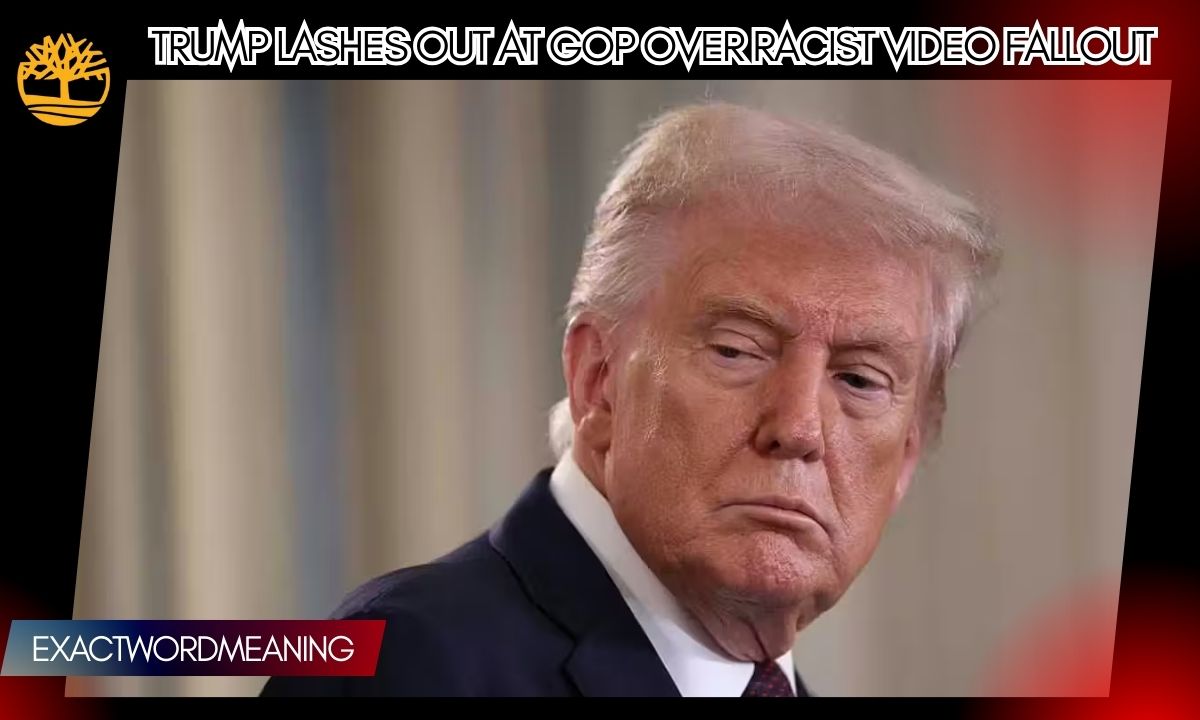
Donald Trump is facing backlash from inside his own party.
The controversy began after a racist video appeared on his Truth Social account. The clip showed Barack Obama and Michelle Obama depicted as apes. The imagery sparked outrage across the political spectrum.
Several Republican lawmakers publicly condemned the post. Trump did not apologize. Instead, he privately criticized those who spoke out.
The episode exposed deep tensions within the Republican Party just months before the 2026 midterm elections.
What Sparked the Controversy
The video was posted late Thursday night. It stayed online for nearly 12 hours.
Most of the clip focused on claims about the 2020 election. Near the end, the racist imagery appeared without warning. The song “The Lion Sleeps Tonight” played in the background.
The imagery echoed racist tropes used for decades to dehumanize Black Americans. The reaction was swift.
White House Initial Response
Press Secretary Karoline Leavitt first dismissed criticism. She described the backlash as “fake outrage.”
She claimed the video came from an internet meme. And she said it portrayed Trump as “king of the jungle.”
However, the White House changed its position by Friday afternoon. Officials said a staffer mistakenly posted the video. The post was deleted.
Trump later told reporters he did not see the final frames. He insisted he “didn’t make a mistake.” He also said he had not disciplined anyone involved.
Republican Lawmakers Break With Trump
The strongest criticism came from inside Trump’s own party.
Tim Scott Speaks Publicly
Tim Scott publicly condemned the video. He called it “the most racist thing” he had seen from the White House.
Scott first tried to reach Trump privately. When he could not, he posted his concerns publicly. He demanded the video be removed.
Trump later called Scott and confirmed it would be taken down. Still, sources say Trump blamed Scott for increasing media attention.
Scott holds a key leadership role. He chairs the National Republican Senatorial Committee. His comments carried weight.
Katie Britt Adds Her Voice
Katie Britt also criticized the post. She said it “should have never been posted.”
Britt works closely with the White House on policy issues. Her public break surprised many observers.
Her office later emphasized her strong voting record with Trump. Still, her initial statement was clear.
Silence From Other Republicans
Not all Republicans spoke out. Some avoided direct criticism. Lindsey Graham and Eric Schmitt did not publicly condemn the video. Their silence stood in contrast to Scott and Britt.
Trump’s Private Reaction at Mar-a-Lago
After the video was removed, Trump traveled to Mar-a-Lago.
According to multiple sources, he expressed anger toward Republican critics. He questioned their loyalty. He suggested there could be political consequences.
Trump reportedly felt the matter should have been handled privately. He believed public criticism damaged party unity.
Targeting Specific Lawmakers
Sources say Trump was particularly upset with Scott. He expected loyalty from a close ally. He was also reportedly angry with Britt. One source claimed he used harsh language to describe her.
Both Scott and Britt were in Palm Beach that weekend for a Republican retreat. Trump did not meet with them.
Invitations That Spoke Volumes
Trump hosted a Super Bowl party that weekend. He invited select Republican senators. Graham and Schmitt attended. Scott and Britt did not. The guest list sent a message. Loyalty mattered.
Laura Loomer’s Influence
Far-right activist Laura Loomer amplified the situation. She reportedly showed Trump statements from Republican critics. She posted online that she was compiling a list of lawmakers who accused Trump of racism. Her involvement added fuel to internal party tensions.
Also Read This Blog: Britney Spears Sells Music Catalog for $200M
White House Damage Control
The administration tried to shift the focus. Officials emphasized Trump’s leadership over the Republican Party.
Leavitt released a statement calling him the “unequivocal leader” of the GOP. She said he remains committed to party unity.
Britt’s office called reports of Trump’s anger “fake news.” Her team highlighted her strong support for the president’s policies.
Scott’s office declined to comment. Despite the messaging, the controversy continued to dominate headlines.
No Discipline for the Staffer
Trump said he has not punished the staffer blamed for the post. He argued the video had circulated online for years.
He often posts directly on Truth Social. However, aides like Natalie Harp and Dan Scavino also have account access.
The president’s decision not to discipline anyone raised questions. Critics noted that he showed more frustration toward Republican lawmakers than toward staff.
Broader GOP Tensions
This controversy did not happen in isolation. It followed other disagreements within the Republican Party.
Some GOP lawmakers recently broke with Trump on tariff legislation. Trump warned those who opposed him would face consequences in primary elections. The pattern suggests that loyalty remains a central demand.
Challenges for Tim Scott
Scott faces a difficult position. He must lead Senate Republicans in upcoming elections. At the same time, he must maintain a relationship with Trump. His public criticism shows that some issues create political risk if ignored.
Political Stakes for Katie Britt
Britt is considered a rising Republican figure. Her willingness to criticize the post may reflect broader concerns about voter reaction.
With midterms approaching, Republican candidates must balance party unity with public perception.
Impact on the 2026 Midterms
The controversy arrives at a critical moment. Campaign season is intensifying. Democrats have seized on the episode. They argue it reflects deeper issues within the GOP.
Republican candidates now face difficult questions from voters. They must decide whether to defend Trump or distance themselves from controversy.
Primary challenges remain a real threat. Trump’s influence over Republican voters remains strong.
Party Unity Under Pressure
The episode highlights a larger question. How unified is the Republican Party? Most GOP lawmakers avoided public criticism. Yet a few felt compelled to speak out.
The tension reveals limits to party discipline. It also shows Trump’s sensitivity to dissent. Internal disagreements may grow as the election cycle continues.
Media and Public Reaction
The story gained national attention quickly. News outlets covered both the video and Trump’s private reaction. Civil rights groups condemned the imagery. Political commentators debated its impact.
Public opinion remains divided. Trump’s base continues to support him strongly. However, moderate voters may react differently.
Leadership and Accountability
The controversy raised questions about leadership style.
Trump defended himself. He blamed a staffer. He refused to apologize directly.
Some Republicans argue that unity requires private discussions. Others believe public accountability matters. The balance between loyalty and principle remains at the center of this debate.
The Road Ahead
Future controversies could test party unity again. Trump has shown he responds strongly to criticism from allies. Republican lawmakers must decide how to navigate that reality. As campaigns accelerate, every public statement carries weight.
Conclusion
The racist video controversy exposed real cracks within the Republican Party. Donald Trump removed the post but refused to apologize. He turned his frustration toward GOP lawmakers who criticized him. Some Republicans chose silence. Others spoke out despite political risk. With the 2026 midterms approaching, the episode underscores a larger struggle over loyalty, leadership, and the direction of the party.

Muhammad Shoaib is a seasoned content creator with 10 years of experience specializing in Meaning and Caption blogs. He is the driving force behind ExactWordMeaning.com, where he shares insightful, clear, and engaging explanations of words, phrases, and captions.