Language never stands still, and every year brings a new wave of Gen Alpha slang. One of the most talked-about words right now is “Huzz,” a term that has flooded TikTok, Discord, and group chats everywhere. It’s short, catchy, and full of social meaning — a perfect snapshot of how digital culture shapes how we talk today.
What Does “Huzz” Mean in Slang?
The slang “Huzz” carries multiple layers of meaning depending on tone, intent, and context. In one sense, it can sound fun or flirty, but in another, it can sound disrespectful or edgy. That’s what makes it such a complex piece of online language. On TikTok, you’ll often see it in captions like “Doing it for the huzz” or “Impressing the huzz.”
It can refer to a group of girls or a romantic interest, but it’s also been used loosely as a playful cheer — similar to how “woohoo” or “yay” is used online. This duality has made it both trendy and controversial among users.
Context is key. When teens use it jokingly with friends, it feels light. But in the wrong setting, the term can sound rude or objectifying. Online slang often blurs these lines, especially as younger audiences remix meanings quickly.
It’s important to understand that “huzz” isn’t just one static word — it’s a mirror of internet culture, where tone decides whether something is playful or problematic.
Origin of the Word “Huzz”
The word “Huzz” first appeared online in 2023, introduced by streamer Kai Cenat during his live streams. It quickly gained traction as fans began repeating it in chat and short clips. From there, it spread into memes, comments, and eventually TikTok trends.
Early users started adapting the word in a joking tone, mixing it with other social slang like “rizz” and “sigma.” Soon, videos began showing teens greeting groups with, “Greetings and salutations, huzz!” — turning the word into a viral inside joke.
Its roots may also connect loosely to “huzzah,” a much older English exclamation meaning joy or celebration. Over time, this evolved online into a shorter, snappier version better suited for memes and captions.
So, while the term started in streamer culture, its rapid spread through TikTok’s “brain rot” humor helped cement “huzz” as part of modern slang.
How “Huzz” Became Popular on TikTok
TikTok thrives on short, viral phrases, and “huzz” fits perfectly into that rhythm. The word blew up as part of a comedic challenge trend where users jokingly tried to “impress the huzz” by showing off dances, outfits, or awkward pickup lines.
Creators began using captions like:
- “For the huzz 💅”
- “Did this for the huzz 😎”
- “Acting different when the huzz walks by 😂”
The humor came from the exaggeration — acting confident or ridiculous to impress imaginary admirers. Over time, this gave “huzz” its meme-like energy and kept it trending.
TikTok’s algorithm thrives on repeatable jokes, and because “huzz” could fit almost any scenario, it spread fast. From school humor to gaming edits, “huzz” became a symbol of Gen Alpha’s ironic internet wit — playful, layered, and endlessly remixable.
Modern Meanings of “Huzz” in 2025
By 2025, “huzz” has two dominant meanings — one lighthearted and one edgy. On one side, it’s used to express celebration or excitement, like saying “yay” or “woo!” On the other, it’s still used to refer to women, often with a tone that can be teasing or disrespectful.
This split identity shows how slang changes depending on who’s using it. In casual chats, “huzz” may simply mean “girlfriend” or “crush,” while in more street-style slang, it takes on a rougher meaning.
Because of this, adults and teachers often find the term confusing. What sounds harmless in one setting might sound offensive in another. This variation keeps “huzz” flexible but also controversial.
Ultimately, “huzz” in 2025 has become a multi-use internet term — part of TikTok humor, digital positivity, and modern youth irony.
Is “Huzz” a Positive or Negative Term?
The answer depends entirely on context and tone. When used casually or humorously among peers, it feels light, even uplifting. But when used to describe women in a dismissive way, it becomes problematic or disrespectful.
Positive uses include:
- “We finally won — huzz!”
- “Free pizza at lunch, huzz!”
Negative uses might sound like:
- “Doing it for the huzz,” implying showing off for girls.
- “Where the huzz at?” which can sound objectifying.
Because of this dual meaning, intent matters more than words. Many users use it playfully, but others see it as part of “brain rot” slang, where humor and irony blur moral lines.
Overall, “huzz” sits in that gray zone — half positive meme, half social critique — typical of Gen Alpha slang culture.
“Huzz” vs. “Huzzah” — What’s the Difference?
While both words sound similar, their meanings and tone are quite different. “Huzzah” is an old English exclamation of joy or victory, often used in a historical or theatrical way. “Huzz,” however, is the modern, digital version — shorter, looser, and full of social slang layers.
Key differences:
- Formality: “Huzzah” feels dramatic and vintage; “Huzz” feels casual and modern.
- Context: “Huzzah” fits speeches or writing; “Huzz” belongs in memes, chats, and videos.
- Meaning: “Huzz” can mean joy or reference people (especially girls), while “Huzzah” always means celebration.
In short, “Huzz” is Gen Alpha’s remix of an old word — stripped down, rebranded, and made viral.
Related Slang Words — “Bruzz” and “Gruzz”
The “uzz” trend didn’t stop with “huzz.” TikTokers quickly added spin-offs like “bruzz” and “gruzz.” These variations keep the playful tone but change the target group.
- “Bruzz” – refers to bros or guy friends; similar to saying “dude” or “bro.”
- “Gruzz” – refers to grandparents or older people; derived from grandma/grandpa.
These variations show how slang evolves through sound and humor. The shared ending “uzz” gives them a meme-like rhythm, perfect for short-form videos.
This pattern — taking one sound and expanding it across meanings — is a classic TikTok linguistic trend, blending wordplay and humor.
When and How to Use “Huzz” Correctly
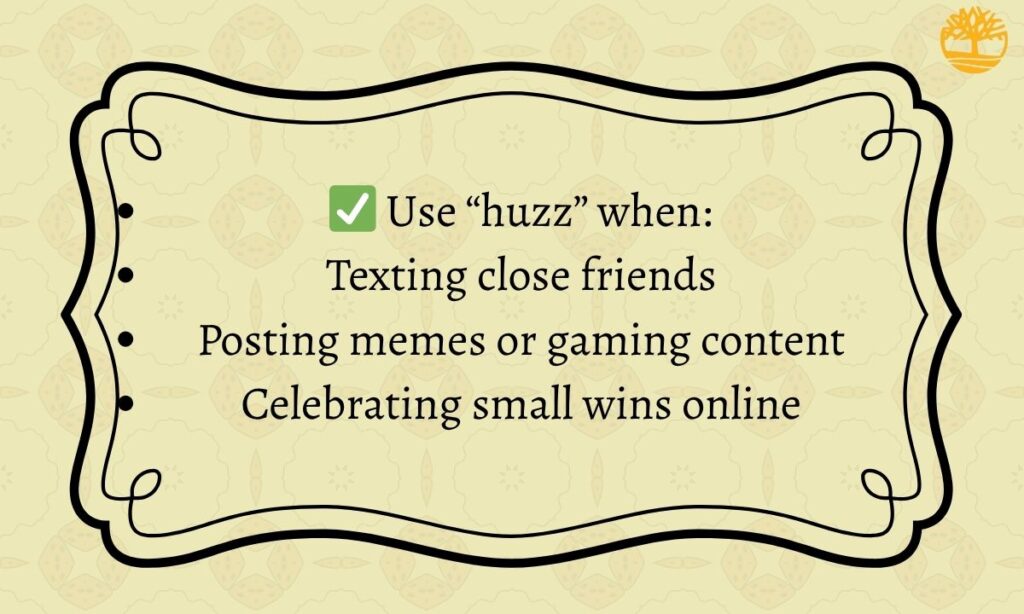
Using “huzz” depends heavily on audience and setting. In casual online chats, it can feel fun and expressive. But in public or professional spaces, it’s often best avoided.
✅ Use “huzz” when:
- Texting close friends
- Posting memes or gaming content
- Celebrating small wins online
❌ Avoid “huzz” when:
- Talking in work or school settings
- Writing emails or formal posts
- Addressing people you don’t know well
Examples:
- “Got an A on my quiz — huzz!” ✅
- “All the huzz at the party were wild.” ❌ (can sound offensive)
Like all slang, “huzz” works best when used lightly, respectfully, and playfully.
Examples of “Huzz” in Text and Social Media
Here are popular contexts where “huzz” appears in 2025:
- Casual Text: “Finally got my license — huzz!”
- TikTok Caption: “For the huzz 😂🔥”
- Group Chat: “Pizza night again? Huzz!”
- Gaming Clip: “Beat the boss — huzz!!!”
- Work Chat (informal): “We finished the project early — huzz to the team!”
Each use carries a tone of excitement or humor, depending on context. The more playful the mood, the more “huzz” fits naturally into conversation.
Because it’s short and memeable, it blends easily with emojis and reaction GIFs, making it perfect for Gen Alpha’s fast-paced slang style.
Alternatives to Using “Huzz”
If you want to keep the positive energy but skip potential confusion, try these alternatives:
Casual Alternatives:
- Yay
- Woohoo
- Let’s gooo
- Yesss
Professional / Polite Alternatives:
- Cheers
- Congratulations
- Kudos
- Well done
Choosing the right word depends on tone: use “huzz” among peers, but swap it for polite phrases in formal or work settings. This keeps your communication friendly yet appropriate.
Cultural Impact of “Huzz” in Gen Alpha Slang
“Huzz” represents more than a single word — it captures how Gen Alpha communicates. It’s quick, ironic, and shaped by digital culture. What once was “huzzah” became “huzz,” proving how internet humor simplifies and repurposes language.
It also shows the power of streamers and TikTok creators to shape vocabulary at lightning speed. Words once used as jokes can evolve into real online identity markers.
As with “rizz,” “sigma,” and “bussin,” “huzz” joins the dictionary of digital youth — half meme, half lifestyle. It’s a reminder that slang is never static; it’s a reflection of culture in motion.
And as new versions like “bruzz” and “gruzz” spread, one thing’s certain — the “uzz” era of slang isn’t going away anytime soon.
Final Thoughts
The slang “huzz” perfectly captures how fast language evolves in the digital age. What began as a casual streamer joke turned into a full-fledged TikTok trend and everyday slang. Its tone can shift from funny to edgy depending on how it’s used, reminding us that context and intent always matter. Whether it’s playful or controversial, “huzz” is a snapshot of Gen Alpha’s creative, ever-changing online culture.
Frequently Asked Questions
What does “huzz” mean on TikTok?
It’s slang for girls or women, often used jokingly in phrases like “doing it for the huzz.”
Who started saying “huzz”?
The term became popular after streamer Kai Cenat used it during his live streams in 2023.
Is “huzz” considered offensive?
Sometimes — it depends on context. It can sound playful or disrespectful based on how it’s used.
What’s the difference between “huzz,” “bruzz,” and “gruzz”?
“Huzz” refers to girls, “bruzz” to bros or male friends, and “gruzz” to older people or grandparents.
Can you use “huzz” in a positive way?
Yes, when it’s used lightheartedly among friends or as a fun expression of excitement.

Muhammad Shoaib is a seasoned content creator with 10 years of experience specializing in Meaning and Caption blogs. He is the driving force behind ExactWordMeaning.com, where he shares insightful, clear, and engaging explanations of words, phrases, and captions.