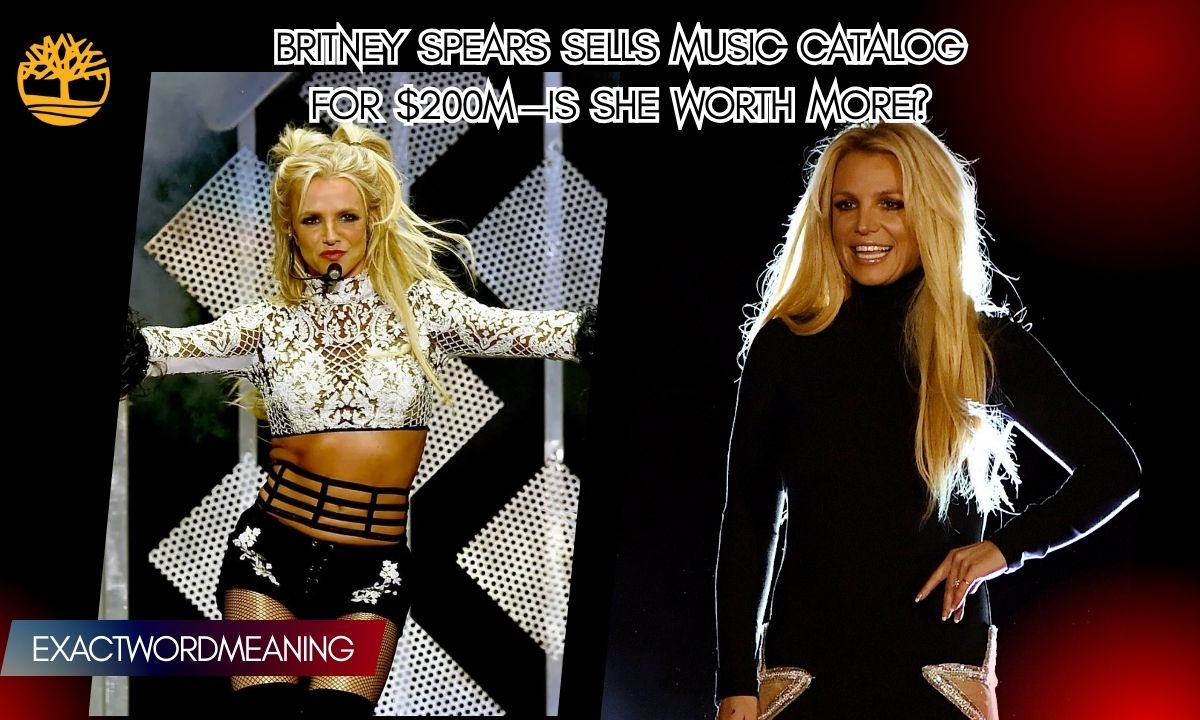
In today’s music industry, selling catalogs has transformed from a last resort into a strategic power move. Streaming platforms generate predictable revenue streams. Wall Street recognizes music rights as valuable assets. Artists from Bruce Springsteen to Justin Bieber are cashing in on decades of work, securing generational wealth in single transactions.
Yet when Britney Spears reportedly sold her entire musical catalog to Primary Wave for approximately $200 million, fans across the globe felt a collective unease. For an artist who revolutionized pop music and shaped an entire generation’s cultural identity, the figure feels surprisingly low.
Why Artists Are Selling Their Music Catalogs
The surge in music catalog sales represents a fundamental shift in how artists view their intellectual property. Once considered untouchable legacy assets, master recordings now function as tradable commodities in a booming market. Several converging factors have created ideal conditions for these unprecedented deals.
The Streaming Era Changed Everything
Streaming platforms like Spotify, Apple Music, and YouTube have introduced predictability into music revenue. Unlike traditional album sales that fluctuated wildly, streaming generates consistent monthly income based on play counts.
This reliability makes catalogs attractive to investors who can forecast returns with reasonable accuracy. According to industry experts, institutional money from Wall Street has increasingly treated music like an asset class, similar to real estate or bonds.
Primary Wave, the company that acquired Britney Spears’ music catalog, specializes in these types of acquisitions. The firm already manages estates for Prince and The Notorious B.I.G., alongside music from Stevie Nicks. These companies bank on evergreen appeal—songs that continue generating streams decades after release.
Tax Advantages Drive Major Decisions
Beyond immediate liquidity, catalog sales offer significant tax benefits. When structured correctly, artists can treat the transaction as a capital gain rather than ordinary income from royalties over time.
This distinction can save millions in taxes. Avi Dahan, founder of Dahan Law Group, emphasized that selling during a hot catalog market allows artists to lock in value at strong multiples while potentially improving tax outcomes.
For Britney Spears, who has spent years recovering from financial and personal turmoil under her conservatorship, the $200 million catalog deal provides immediate financial security. However, fans question whether the short-term gain outweighs the long-term value of owning rights to hits like “Toxic,” “…Baby One More Time,” and “Circus.”
Key Reasons Artists Sell Their Catalogs
- Predictable streaming revenue makes valuations more accurate and appealing to investors
- High market valuations create once-in-a-generation opportunities to capitalize on decades of work
- Estate planning ensures financial security for heirs without complex royalty structures
- Tax advantages through capital gains treatment rather than ordinary income rates
- Creative freedom from legacy pressures, allowing artists to focus on new projects or retirement
- Immediate liquidity converts future uncertain royalties into guaranteed lump-sum payments
- Market timing capitalizes on current investor enthusiasm before market conditions potentially cool
How Britney Spears Changed Pop Culture
Britney Spears didn’t just make hit songs—she defined what it meant to be a pop star in the 21st century. From her debut in 1999, Spears set standards that contemporary artists still emulate. Understanding her influence reveals why $200 million seems inadequate for her catalog’s true worth.
The Blueprint for Modern Pop
Spears’ debut album “…Baby One More Time” arrived at a pivotal moment in music history. The title track became an instant cultural phenomenon, establishing Spears as more than a singer—she became a brand. The album sold over 10 million copies in its first year alone, spawning a global tour and cementing her status as a generational icon.
Beyond commercial success, Spears pioneered the aesthetic and sonic templates that define modern pop. Her early-2000s fashion—low-rise jeans, crop tops, and provocative stage costumes—has experienced a massive resurgence.
In 2025, artists like Sabrina Carpenter, Tate McRae, and Addison Rae paid homage to her over-the-top early-aughts style, proving her influence transcends eras.
Vocal Innovation Still Reverberates
Spears’ signature breathy, sultry whisper tone seemed unconventional during her peak years. Critics questioned whether it constituted “real” singing. Today, that same hush-hush delivery dominates airwaves and TikTok.
Artists like Tate McRae and Selena Gomez employ similar vocal techniques, directly derivative of Spears’ famous tone. What once faced criticism now defines contemporary pop aesthetics.
Her influence extends beyond sound and style into the very structure of celebrity itself. Spears navigated intense media scrutiny, paparazzi obsession, and public breakdowns before social media existed. Her experiences helped shape discussions around mental health, privacy rights, and the exploitation of young female entertainers.
Nine Studio Albums of Cultural Impact
Spears’ musical catalog includes nine studio albums spanning from 1999 to 2016. Hits like “Oops!… I Did It Again,” “Toxic,” “Gimme More,” “Womanizer,” and “Till the World Ends” remain cultural touchstones.
These songs don’t just stream well—they soundtrack movies, television shows, advertisements, and countless TikTok videos. Each usage generates revenue, making her catalog a perpetual money-making machine.
Comparing Britney’s Deal to Other Major Catalog Sales
Context matters when evaluating whether $200 million adequately values Britney Spears’ contributions to music. Comparing her deal to other recent catalog sales illuminates both industry trends and potential undervaluation.
Major Artist Catalog Sales (2023-2026)
| Artist | Reported Sale Price | Buyer | Year | Career Stage at Sale |
| Bruce Springsteen | $550 million+ | Sony Music | 2021 | Active touring, age 72 |
| Bob Dylan | $400 million+ | Universal Music | 2020–2022 | Touring, age 80+ |
| Justin Bieber | $200 million | Hipgnosis | 2023 | Active recording and touring |
| Britney Spears | ~$200 million | Primary Wave | 2026 | Retired from performing |
| Shakira | Undisclosed (est. $100M+) | Sony Music | 2022 | Active touring |
| Justin Timberlake | ~$100 million | Hipgnosis | 2022 | Active recording |
The comparison reveals an uncomfortable truth: Spears’ deal matches Justin Bieber’s despite her longer career, broader cultural impact, and more extensive catalog. While Bieber released his Grammy-nominated album “Swag” in 2025 and continues headlining major festivals like Coachella, Spears hasn’t released music in a decade. Yet her influence permeates modern pop in ways Bieber’s may not.
Taylor Swift’s decision to re-record her masters rather than sell them offers a contrasting approach. After her high-profile battle with entertainment executive Scooter Braun, Swift bought back control of her work.
She and Beyoncé represent rare exceptions—artists whose careers remain so commercially dominant that total ownership works in their favor. The music industry orbits around their creative output, giving them leverage few others possess.
The Valuation Question
Industry analysts generally value catalogs based on a multiple of annual streaming and licensing revenue. Typical multiples range from 10x to 20x annual earnings, depending on the catalog’s age, cultural relevance, and growth trajectory.
Given Spears’ enduring influence and consistent streaming numbers, some experts argue her catalog merits a higher multiple than received.
“Valuations and multiples have been trending upward,” explained Bradfield Biggers of Halloran Farkas + Kittila LLP. “Now may just be the first time she and her advisors feel the market is willing to properly value her work.” The timing suggests Spears prioritized certainty and immediate liquidity over potentially higher future valuations.
What This Means for Her Career
Selling one’s entire music catalog inevitably raises questions about artistic future and legacy. For Britney Spears, the sale carries particular emotional weight given her complicated relationship with the music industry.
A Possible Goodbye?
The catalog sale seems to confirm fears many fans have harbored since Spears stopped performing and freed herself from the 13-year conservatorship controlled by her father, Jamie Spears. Perhaps this signals she’s truly done—finished with an industry that brought her joy but also subjected her to exploitation and trauma.
Her Instagram dancing videos represent her only real contact with fans these days. She rarely leaves her Los Angeles home and has shown no interest in returning to recording or touring.
Music industry veteran Avi Dahan noted that catalog sales don’t automatically equal retirement. “In many cases, it’s a strategic move,” Dahan explained. Artists can sell existing rights while retaining the ability to create new music. Future recordings would generate separate revenue streams entirely under the artist’s control.
Examples of Artists Who Sold and Continued
Justin Bieber sold his catalog for approximately $200 million and immediately continued his career trajectory. He released “Swag” in 2025, earned Grammy nominations, and headlines Coachella in 2026.
Shakira completed the most successful global tour for a Latino artist in history after selling her catalog rights to Sony Music. Both artists demonstrate that selling doesn’t necessitate retirement.
However, Britney Spears’ situation differs fundamentally from Bieber and Shakira. She hasn’t released an album in ten years. Her last tour ended in 2018. Most significantly, her conservatorship lasted over a decade, during which others controlled her creative output, finances, and personal life.
When addressing the court as her conservatorship ended in 2021, Spears stated, “I just want my life back. All I want is to own my money.”
The Freedom of Letting Go
Paradoxically, selling her catalog might represent Spears reclaiming agency rather than surrendering it. By converting future uncertain royalties into guaranteed wealth, she secures financial independence without remaining tethered to an industry that caused immense pain.
If she never wants to sing publicly again, she can afford not to. If she changes her mind, she retains the ability to create new work on her own terms.
“Selling your catalog can also be an emotional experience, as someone else has significant financial and legal connection to your art,”
Biggers noted. “This may purely be the first time she’s been approached by a buyer that she believes will carry and do right by her legacy.”
The Financial and Emotional Impact of Selling Masters
Understanding catalog sales requires examining both financial mechanics and psychological implications. Artists face complex decisions weighing immediate security against long-term value and emotional attachment.
The Money Side
The $200 million figure, while substantial, must be evaluated against Spears’ total career earnings and her catalog’s potential future value. Throughout her career, Spears reportedly earned between $300 million and $600 million from albums, tours, merchandise, and endorsements. The conservatorship controlled much of that wealth until 2021.
Streaming continues growing globally. Emerging markets like India, Southeast Asia, and Africa represent massive untapped audiences. As these regions develop economically and gain internet access, Spears’ classic hits will reach billions of new potential listeners.
The catalog buyer, Primary Wave, bets on this long-term growth generating returns far exceeding the $200 million investment.
From Spears’ perspective, $200 million guaranteed today eliminates uncertainty. She avoids market volatility, potential streaming platform disruptions, and changing consumer preferences. She also gains immediate access to wealth previously controlled by others.
Tax Optimization Strategies
Music catalog sales can qualify for long-term capital gains treatment if structured properly. Instead of paying ordinary income tax rates (up to 37% federally) on royalties received over years, sellers potentially pay capital gains rates (typically 20% for high earners). This difference saves tens of millions of dollars on a $200 million transaction.
Additionally, sellers can employ various estate planning strategies to further reduce tax burden. Trusts, charitable donations, and strategic gift giving allow wealthy individuals to pass wealth to heirs more efficiently than if they received annual royalty income taxed at higher rates.
The Emotional Calculation
Numbers tell only part of the story. For Britney Spears, these songs represent her life’s work—created often under intense pressure and sometimes without her full consent. The conservatorship gave others control over her creative decisions, tour schedules, and artistic direction.
Selling the catalog to Primary Wave might provide psychological closure, allowing her to finally separate her identity from work created under duress.
Fans struggle with this reality because they view Spears’ music as irreplaceable cultural artifacts. Songs like “Toxic” and “…Baby One More Time” define their teenage years and represent pivotal moments in pop culture history. The idea that someone else now owns these masters feels like betraying her legacy.
Yet perhaps Spears views it differently. Maybe owning those masters kept her tethered to painful memories. Maybe selling them represents freedom—the ability to move forward without constantly confronting a past she didn’t always control.
Industry Trends and Future Implications
The Britney Spears catalog sale reflects broader shifts reshaping the music industry’s economic foundations. These trends will influence artist decisions for generations.
Private Equity’s Growing Role
Institutional investors increasingly view music catalogs as alternative assets worthy of significant capital allocation. Firms like Hipgnosis Song Management, Primary Wave, and Shamrock Capital actively acquire catalogs, treating them like income-producing real estate. This influx of capital drives valuations higher, creating seller’s markets for legacy artists.
However, some industry observers warn that this speculative bubble could burst if streaming growth slows or consumer preferences shift dramatically. Investors banking on perpetual growth might face disappointing returns if younger generations don’t embrace older music as expected.
The Streaming Model’s Evolution
Current catalog valuations assume streaming remains dominant and continues growing. But technology evolves unpredictably. New platforms, AI-generated music, virtual concerts, and yet-unimagined innovations could disrupt current models. Artists selling today bet that guaranteed money now outweighs uncertain future disruptions.
Conversely, buyers bet that streaming becomes more entrenched and profitable. As platforms negotiate better terms with labels and expand globally, hit catalogs should generate increasing revenue. Primary Wave believes Britney Spears’ timeless pop songs will stream indefinitely, making $200 million a bargain in retrospect.
Artist Empowerment vs. Corporate Control
The catalog sale trend generates philosophical debates about artistic ownership. Some view sales as artists finally receiving fair compensation for work historically exploited by record labels. Others see it as surrendering hard-won ownership back to corporations, reversing decades of artists’ rights movements.
Prince famously fought throughout his career for artists to own their work. His estate’s subsequent sale of music rights to Universal Music for over $30 million in 2021 seemed to contradict his philosophy. Similarly, Spears’ sale might frustrate advocates who champion artist ownership.
However, circumstances matter. Spears endured unique challenges that make her situation incomparable to most artists. Her decision should be understood within the context of her specific needs, not judged against idealized principles.
Britney’s Influence on Contemporary Artists
No assessment of Spears’ catalog value is complete without acknowledging her ongoing influence on today’s biggest pop stars. Her aesthetic, vocal style, performance approach, and public persona established templates that define modern celebrity.
The Sabrina Carpenter Connection
Sabrina Carpenter’s massive breakthrough in 2025 drew direct inspiration from Spears’ early-2000s era. Carpenter’s fashion choices, music video concepts, and provocative performance style echo Spears’ iconic moments. This isn’t coincidental homage—it’s recognition that Spears created the blueprint for successful female pop stardom.
Addison Rae’s Devotion
Addison Rae, who transitioned from TikTok influencer to pop artist, cites Britney Spears as her primary inspiration. Rae’s entire aesthetic channels Spears’ “Toxic” and “I’m a Slave 4 U” eras. When Rae released music and performed on award shows, the Spears influence appeared unmistakable. This cross-generational appeal demonstrates Spears’ catalog’s enduring commercial viability.
The Whisper-Pop Revolution
Perhaps Spears’ most overlooked innovation remains her vocal delivery. Her breathy, intimate singing style faced criticism during her peak years. Today, artists like Tate McRae, Selena Gomez, and countless TikTok creators employ similar techniques.
The sultry whisper-singing that Spotify algorithms favor traces directly back to Spears’ pioneering approach.
This widespread influence suggests Spears’ catalog will remain commercially relevant for decades. New artists inspired by her work introduce her music to younger audiences who then discover the originals. This self-perpetuating cycle ensures sustained streaming numbers and licensing opportunities.
Is $200 Million Enough for a Pop Culture Revolution?
Britney Spears’ reported $200 million catalog sale to Primary Wave represents far more than a business transaction—it embodies her complex relationship with fame, the music industry’s evolution, and ongoing debates about artistic ownership and compensation. Financially, experts disagree on whether the valuation adequately reflects her catalog’s worth.
Culturally, the answer is probably no. Yet perhaps the real measure of value isn’t what someone paid, but what can never be bought or sold: the way “…Baby One More Time” still makes people dance, the young artists discovering “Toxic” and having their minds blown, and the understanding that some legacies are simply priceless, even when they come with price tags.

Muhammad Shoaib is a seasoned content creator with 10 years of experience specializing in Meaning and Caption blogs. He is the driving force behind ExactWordMeaning.com, where he shares insightful, clear, and engaging explanations of words, phrases, and captions.