Ever seen someone post “bomboclat” online and wondered what it means? This Jamaican slang word started as a strong curse but turned into a viral meme on TikTok and Twitter. Let’s break down where it came from, how it’s used, and why it’s still one of the most talked-about slang terms in 2025.
What Does Bomboclat Mean?
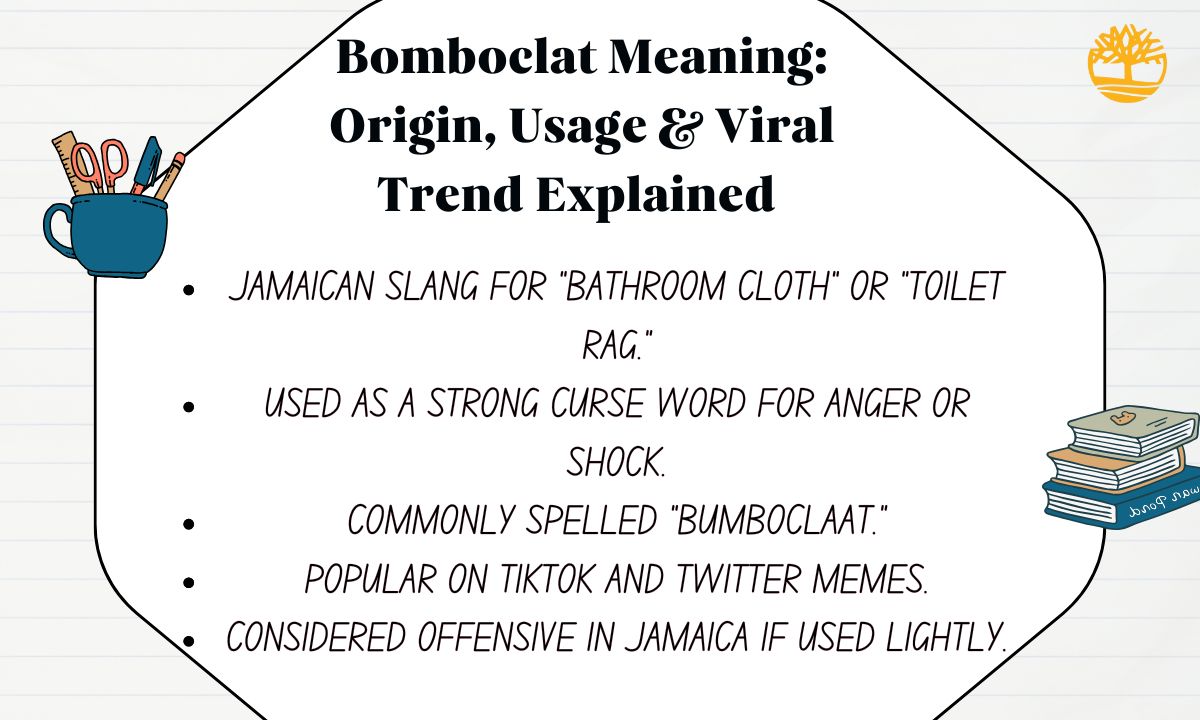
“Bomboclat” is a Jamaican slang word that literally means “bathroom cloth” or “toilet rag.” It’s one of the strongest curse words in Jamaican Patois, often used to express anger, frustration, or shock. While outsiders sometimes see it as funny or trendy, in Jamaica it carries real emotional and cultural weight.
People use “bomboclat” the same way English speakers might use “damn,” “shit,” or “fuck.” It can be said in anger, surprise, or even excitement depending on tone. However, it’s important to remember that in Jamaican culture, it’s considered offensive, especially when used toward someone directly.
Bomboclat Definition and Translation
The literal meaning of bomboclat is “bottom cloth.” In everyday Jamaican Patois, “bombo” means butt and “claat” means cloth. Over time, it became a term used for toilet paper or sanitary cloth, giving it a vulgar connotation.
This word’s power comes from how it connects to bodily functions—topics traditionally seen as taboo in Jamaican society. Because of that, using “bomboclat” is viewed as both shocking and expressive, depending on context.
Key Points
- Literal meaning: “bottom cloth” or “toilet rag.”
- Common use: curse or emotional exclamation.
- Alternate spelling: bumboclaat.
How to Use Bomboclat Correctly
Using “bomboclat” properly means understanding both its meaning and cultural sensitivity. While it can express strong emotion, using it in the wrong setting can offend people who take its origins seriously.
It’s best to reserve this word for informal or online spaces where you’re sure others understand it’s slang. In Jamaica, using it around elders, teachers, or police can lead to serious trouble or disrespect.
As an Exclamation
“Bomboclat” can be used to show shock, frustration, or disbelief.
Examples:
- “Bomboclat! I missed my flight again.”
- “Bomboclat! The rain just ruined the party.”
As an Insult
Used directly toward someone, it becomes highly offensive. It’s similar to calling someone a jerk or worse.
Example:
- “You real bomboclat, don’t talk to me again.”
In Memes and Slang
Online, “bomboclat” often appears in memes or TikTok captions. It’s used humorously, but the vulgar meaning still exists, so users should be careful.
Example:
- A shocked reaction photo captioned “Bomboclat when I see my exam results.”
Bomboclat Origin and History
The word bomboclat comes from Jamaican Patois, a Creole language formed in the 17th century. It blends English, African dialects, and Creole influences created by enslaved Africans in Jamaica. The term originally referred to a cloth used for personal hygiene, but over time, it evolved into a curse word.
By the 1980s, Jamaican immigrants brought the word to New York City, where it became part of urban slang and even appeared in reggae and dancehall lyrics. It symbolized rebellion, raw emotion, and authenticity in speech.
Historical Roots
- 17th century: Used literally for sanitary cloths.
- Later years: Turned into a curse word expressing strong emotion.
- Modern use: Spread through music, diaspora, and internet culture.
Cultural Meaning in Jamaica
In Jamaica, bomboclat is more than just a swear word—it’s a powerful emotional expression. It shows deep frustration, anger, or disbelief in moments when softer words won’t do. Because it’s tied to taboos around hygiene and menstruation, it’s considered highly disrespectful in polite company.
Culturally, it reflects Jamaica’s creative and passionate use of language. Even though it’s harsh, it’s also part of the rhythm and intensity that make Jamaican Patois unique. People who use it understand its strength—it’s not said casually.
Examples in Culture
- In reggae or dancehall music, artists might use “bomboclat” to express raw emotion.
- Among close friends, it might appear jokingly, but still carries impact.
- Outsiders using it lightly can seem disrespectful or unaware of its meaning.
In short, “bomboclat” is a word of power—expressive, emotional, and rooted deeply in Jamaican identity. Use it carefully, and always with respect for its origin and culture.
Bomboclat in Social Media and Memes
The word bomboclat exploded on social media, becoming one of the most recognizable slang terms online. What started as a Jamaican curse word turned into a viral internet expression used in memes, captions, and comments. Though many use it playfully, it still carries a vulgar background that shouldn’t be ignored.
Platforms like Twitter, TikTok, and Instagram helped transform “bomboclat” from a cultural phrase into a global trend. Users started attaching it to reaction images or videos that showed shock, confusion, or surprise. Over time, it became less about its literal meaning and more about how funny or relatable the meme looked.
The Viral Meme Trend
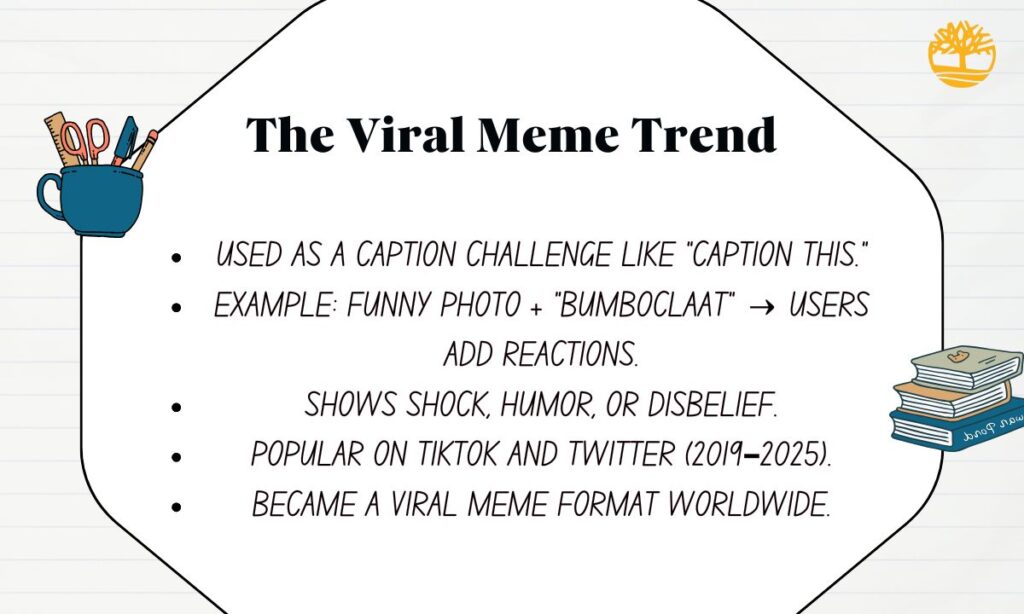
The bomboclat meme trend began around 2019, when users started posting images with the word “bomboclat” as a single caption. It was used like “caption this,” inviting others to respond with creative or funny interpretations. The simplicity of the format made it go viral within days.
People loved the meme because it allowed them to express a wide range of emotions—shock, disgust, joy, or confusion—without needing to explain much. The meme became especially popular among younger users who didn’t know its original cultural meaning but enjoyed its expressive sound and vibe.
Examples of Viral Usage
- A photo of a cat falling off a table captioned “Bomboclat!”
- A meme showing an awkward selfie with the caption “Bomboclat when you realize tomorrow’s Monday.”
- A shocked face reaction photo paired with “Bomboclat me when I check my bank account.”
Each version added humor, exaggeration, or irony. The word itself became a reaction, symbolizing how the internet thrives on expressive, punchy slang.
Modern Internet Usage
Today, “bomboclat” is often used detached from its Jamaican roots. For many social media users, it’s just another trendy word to express disbelief or surprise. While it might seem harmless, it’s important to note that in Jamaica, the word is still a strong profanity.
Online, the tone and context determine how it’s received. In memes, it’s usually playful. In direct comments or captions, it can come off as rude or offensive. Because it spread globally, people use it differently—some jokingly, others without realizing its original meaning.
When It’s Commonly Used Online
- To react to shocking or funny content.
- To caption memes that need no explanation.
- To show frustration or amusement in short clips or comments.
While the humor is what keeps it alive online, it’s good to remember that words with cultural origins deserve respect—especially when taken out of context for entertainment.
Bomboclat Meaning on TikTok and Twitter
On TikTok and Twitter, “bomboclat” became a go-to phrase for reaction-based humor. Users would post funny or exaggerated videos with the caption “bomboclat,” often to show shock, embarrassment, or chaos. The word quickly became part of everyday slang in comment sections and hashtags.
TikTok creators began using it in challenges and skits, sometimes mimicking Jamaican accents or reacting to unexpected events. While this helped boost its popularity, it also raised discussions about cultural appropriation and respect for Jamaican language.
How It’s Used in Context
- “Bomboclat! I dropped my phone in the pool!”
- “Bomboclat when my Wi-Fi stops during a live stream.”
- “Bomboclat that awkward moment you wave at someone who wasn’t waving at you.”
These examples show how flexible the term has become. Its tone depends on delivery—it can be funny, dramatic, or frustrated. Still, it’s essential to understand its background before using it carelessly.
Urban Dictionary Bomboclat Meaning
According to Urban Dictionary, “bomboclat” is defined as a vulgar Jamaican curse word, often used to express anger, shock, or disbelief. It’s compared to English swear words like “damn,” “shit,” or “fuck.” Many entries emphasize that although it’s popular online, it’s still offensive in traditional Jamaican culture.
Urban Dictionary users note that people outside Jamaica often misuse it, unaware of its deep cultural and emotional meaning. What sounds trendy to one person can be deeply disrespectful to another. This difference highlights how internet culture can change the meaning of slang when it spreads globally.
Common Interpretations on Urban Dictionary
- “A Jamaican curse word meaning something terrible or shocking.”
- “Used to express strong emotion or disbelief.”
- “A word that sounds funny but has serious meaning in Jamaican slang.”
In short, “bomboclat” may seem like harmless fun online, but it remains one of Jamaica’s strongest swear words. Understanding where it comes from—and using it with awareness—shows respect for the language and the culture that created it.
Similar Jamaican Slang Words
Jamaican slang is full of expressive words that carry deep cultural meanings. Some are lighthearted, while others are extremely strong and should be used with caution. Bomboclat, Raasclaat, and Bloodclaat are part of this family of intense expressions rooted in Jamaican Patois.
These words reflect emotion, frustration, or anger but also reveal how language evolves from daily life. Each slang term comes from a simple meaning—often connected to cloth or cleanliness—but over time became a powerful way to express raw emotion.
Raasclaat (Rassclaat)
Meaning and Use
“Raasclaat,” sometimes spelled “Rassclaat,” literally means “ras cloth” or “rear cloth.” It’s one of Jamaica’s strongest curse words, used to express anger, surprise, or disgust. Like bomboclat, it’s not something used casually in Jamaica.
People often say it in moments of frustration or when something shocking happens. While it’s common in reggae lyrics and Jamaican movies, saying it in public could offend locals. It’s best to understand its weight before using it.
Examples of Context
- “Raasclaat! I can’t believe he did that!”
- “You serious, rassclaat?”
- Used similarly to English words like “damn” or “hell,” but far stronger in tone.
These examples show how emotional and expressive Jamaican Patois can be. The word captures anger and disbelief in one punchy sound.
Bloodclaat
Meaning and Origin
“Bloodclaat” translates to “blood cloth.” It originally referred to a menstrual or medical cloth, which explains why it’s such a taboo and powerful word. Over time, it evolved into a heavy curse expressing frustration or rage.
It’s often considered even stronger than bomboclat. Jamaicans use it in emotional outbursts or to emphasize intense feelings. Outsiders should be careful—it can sound very offensive when used without context.
Examples of Use
- “Bloodclaat! That car almost hit me!”
- “Move from here, bloodclaat fool!”
- Similar in impact to English expletives like “f***” or “s***.”
These phrases show how “bloodclaat” adds passion and emphasis in speech, though it’s still seen as a serious profanity in Jamaica.
Bomboclat in Pop Culture and Music
Role in Music and Media
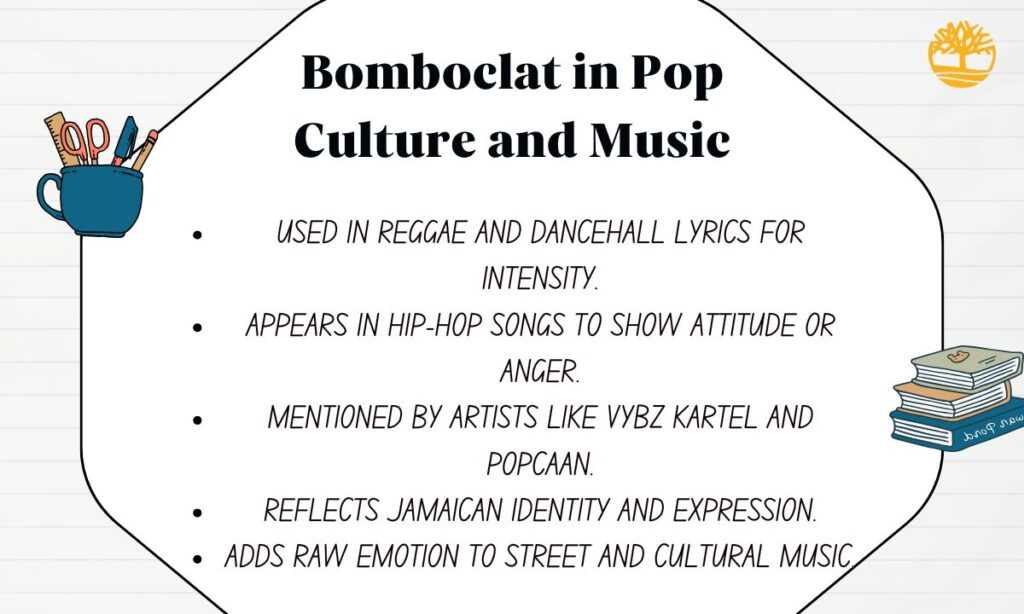
The word bomboclat has appeared in reggae, dancehall, and hip-hop for decades. Artists use it to show intensity, cultural pride, or emotional fire. Though offensive, in music it often serves as a symbol of raw authenticity.
From Bob Marley’s era to modern dancehall tracks, bomboclat represents rebellion and real emotion. Musicians use it to connect with their roots and express identity, often mixing it with rhythm and rhyme.
Examples in Pop Culture
- Dancehall songs often shout “Bomboclat!” before a beat drop.
- Hip-hop artists use it to add Caribbean flair to lyrics.
- In movies or comedies, it’s used for dramatic or humorous emphasis.
Its presence in music shows how language can travel—sometimes losing its taboo edge, sometimes keeping it alive as a mark of authenticity.
Global Use and Cultural Sensitivity
Across Cultures
Today, bomboclat and similar Jamaican slang have spread through memes, songs, and social media. People across the world use them casually, often without knowing their real meaning or cultural weight. This global use has made the words popular but also misunderstood.
While they may seem fun or expressive, it’s important to remember their origins. In Jamaica, these are still strong curse words, not everyday slang. Using them lightly can come off as disrespectful.
Cultural Respect
When using Jamaican terms, understanding the cultural context matters. These words are part of a living language that holds both history and identity. Using them without awareness can be seen as cultural appropriation.
- Always learn what a word truly means before repeating it.
- Avoid using it in serious or public settings.
- Respect the fact that what’s funny online may be offensive offline.
Using Jamaican slang respectfully means appreciating the language, not exploiting it. Knowing where the words come from helps keep the culture’s dignity intact while still enjoying its rich expression.
Bomboclat in African and Arabic Online Slang
There’s no direct Arabic translation for “bomboclat,” but it’s become recognizable in African and Caribbean online slang. Many people in African countries use it casually on platforms like Twitter and TikTok, often unaware of its deep Jamaican roots.
While the word spread across borders, its original meaning remains Jamaican. Online, it’s more of a reaction term—used in memes or to show surprise—rather than a true curse word for many users outside Jamaica.
However, despite its lighthearted use online, “bomboclat” still carries a vulgar tone. It’s important to understand that what feels funny or trendy online may sound extremely offensive to Jamaicans.
Common Misunderstandings
| Misunderstanding | Clarification |
| Many people think “bomboclat” is just another meme term. | In reality, it’s a real profanity with deep cultural and emotional significance in Jamaican Patois. |
| It’s often used online without context, causing confusion. | People see it as a funny or viral phrase but don’t realize it’s equivalent to swearing. Context changes everything. |
| It’s fine to use casually or professionally. | You should avoid using it in formal or professional settings. Even casually, use caution and respect its cultural roots. |
Polite Alternatives to Bomboclat
If you like the expressive nature of Jamaican slang but want to stay polite, there are plenty of safer options. These words capture surprise or emotion without being offensive.
- “Wow”
- “Oh my God”
- “Dang”
- “Shoot”
For a Jamaican-style vibe that’s positive and respectful, you can say:
- “Wah gwaan” (What’s up?)
- “Irie” (Everything’s good)
- “Big up” (Respect or shout-out)
These phrases show respect for Jamaican culture while keeping your language friendly and appropriate, both online and offline.
Frequently Asked Questions
Is Bomboclat a Bad Word?
Yes, it’s a strong profanity in Jamaican Patois.
Where Did Bomboclat Come From?
It originated from Jamaican Patois, blending English and African influences.
Can I Use Bomboclat Online?
Only if you understand its cultural meaning and use it respectfully.
How Is It Pronounced?
It’s pronounced “bum-bo-claat” with stress on the middle syllable.
Conclusion
While bomboclat is popular online, it’s more than just internet slang. It carries deep cultural roots and emotional expression within Jamaican identity. Using it without understanding can seem disrespectful or careless. Appreciate the culture it comes from, and if you use it, do so with awareness and respect.

Muhammad Shoaib is a seasoned content creator with 10 years of experience specializing in Meaning and Caption blogs. He is the driving force behind ExactWordMeaning.com, where he shares insightful, clear, and engaging explanations of words, phrases, and captions.