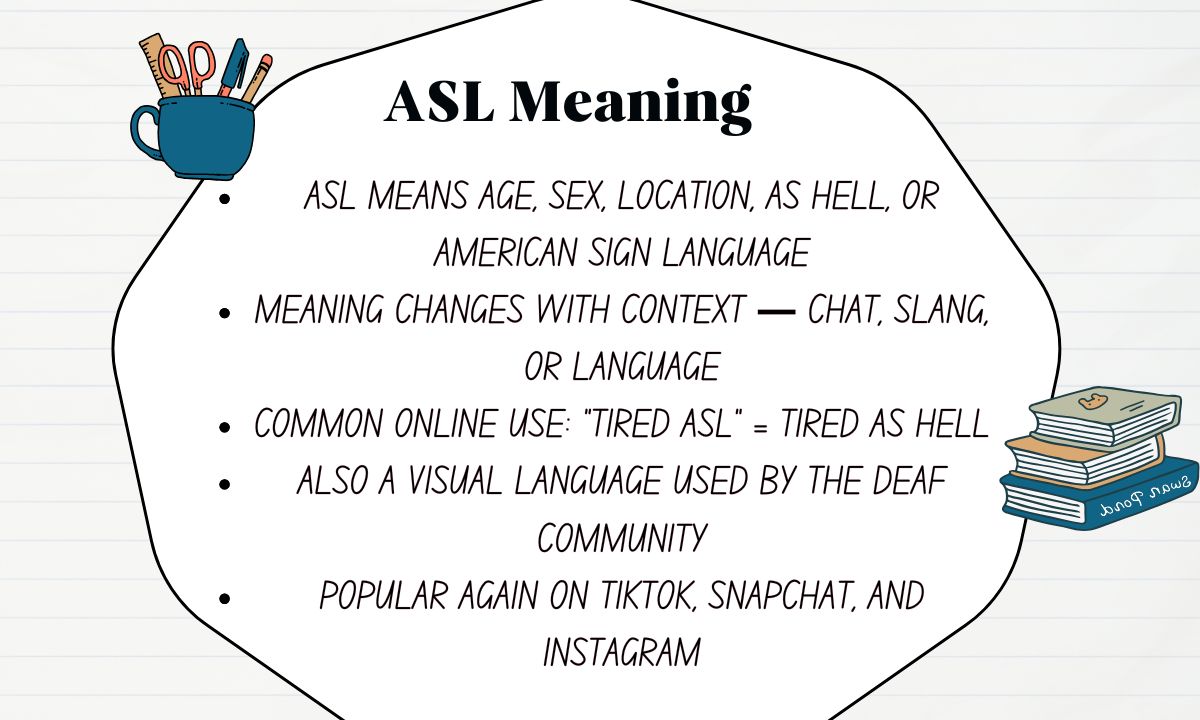
Ever seen someone type “asl” and wondered what it means? You’re not alone. In today’s chats and TikTok captions, ASL can stand for “Age, Sex, Location,” “As Hell,” or even “American Sign Language.” Its meaning changes with context, making it one of the most versatile slang terms on social media.
What Is the Meaning of ASL?
ASL is a short, three-letter abbreviation that holds different meanings depending on where it’s used. In online slang, it can show emotion or intensity, while in formal settings, it often refers to American Sign Language. The key is understanding the context — it changes everything.
Over time, ASL has evolved from a chatroom phrase to a modern social media term. It connects old internet culture with today’s online expressions. Whether you’re texting, scrolling TikTok, or chatting on Snapchat, knowing what ASL means helps you stay in the loop.
ASL Full Form
The full form of ASL can vary based on use. It may stand for:
- Age, Sex, Location (chat abbreviation)
- As Hell (modern slang for emphasis)
- American Sign Language (visual language for the Deaf community)
Each version has its own place. While older generations remember the chat version, younger users on TikTok and Instagram use it for humor or exaggeration. In accessibility or educational settings, it refers to sign language, not slang.
ASL Meaning in Text
In texting, ASL usually shows up as casual slang. People use it to express how strongly they feel about something, like saying “tired asl” instead of “tired as hell.” It adds emotion and personality to short messages without needing long sentences.
This shorthand is especially common among Gen Z users on Snapchat, TikTok, and Instagram. It gives messages a relaxed, conversational tone. The lowercase “asl” version is preferred in slang to keep things casual and trendy.
Original Chatroom Meaning – Age, Sex, Location
Back in the 1990s and early 2000s, ASL was a common question in chatrooms. It helped strangers quickly exchange basic details while chatting online.
Example:
- Person 1: “asl?”
- Person 2: “18/f/NY”
It was the social media intro of the dial-up era — short, fast, and to the point. While it’s mostly used ironically today, the phrase still represents the early days of internet culture and online interaction.
How Is ASL Different from Spoken Language?
American Sign Language (ASL) is a visual and gestural language, while spoken languages rely on sound and speech. ASL uses hand movements, facial expressions, and body language to convey meaning. Instead of letters or words formed by sound, it communicates through signs and spatial grammar, making it completely distinct from English or any spoken language.
Another key difference is that ASL has its own grammar and syntax, which are not direct translations of English sentences. It’s a fully developed language with its own rules, culture, and regional variations. People who use ASL often combine gestures, expressions, and space to create depth and clarity — something spoken languages can’t visually achieve.
Key Differences Between ASL and Spoken Language:
- Mode of Communication: ASL uses sight; spoken languages use sound.
- Grammar: ASL has a unique structure, not based on English grammar.
- Expression: Facial expressions and body movement are crucial to meaning.
- Cultural Context: ASL is tied to Deaf culture and identity, not just translation.
- Regional Variation: ASL has dialects and signs that differ by region, just like accents in spoken languages.
- Learning Process: ASL learners must train their visual attention and spatial awareness instead of focusing on pronunciation.
These differences make ASL a rich, expressive, and independent language, not merely a signed version of English.
ASL Slang Meaning on TikTok & Snapchat
On TikTok and Snapchat, “asl” has taken on a whole new identity. It’s no longer about personal details but about expressing emotions in a dramatic or funny way. People use it to exaggerate how they feel — it’s a simple way to add intensity to short messages.
This slang is popular because it fits the fast, expressive nature of social media. When someone says “hungry asl” or “tired asl,” they’re not just describing a feeling — they’re emphasizing it. It’s quick, relatable, and perfect for captions, comments, or short texts.
Examples of ASL Slang
The slang “asl” stands for “as hell”, but it’s written without spaces to sound casual and modern. It’s a favorite among Gen Z because it adds emotion without needing extra words. Instead of long sentences, users drop “asl” at the end for dramatic effect.
Here are some common examples you’ll see online:
- “I’m tired asl” = “I’m tired as hell.”
- “That movie was sad asl 😭”
- “He’s funny asl.”
- “It’s cold asl outside.”
Each phrase uses “asl” to show a strong feeling — tiredness, sadness, humor, or discomfort. It’s a quick way to make text messages sound more natural and emotional. On TikTok, this slang often appears in captions, comments, or skits where people exaggerate real-life situations for humor.
This shift from “Age, Sex, Location” to “as hell” shows how internet culture evolves. What started as a chatroom abbreviation decades ago is now a trending way to express mood and personality online.
ASL Meaning on Instagram & Social Media
On Instagram and other social platforms, “asl” is everywhere. People use it in captions, memes, and DMs to express emotions, exaggerate reactions, or make jokes. It fits perfectly with the short, punchy style of modern posts.
Influencers and creators often use “asl” in reels or stories to grab attention. Saying “tired asl” or “funny asl” instantly adds humor or drama. It keeps conversations light and relatable while showing personality.
This slang has become a key part of social media language. It’s expressive, simple, and fun — everything that fits the tone of today’s online culture.
ASL vs. American Sign Language
Not every use of ASL online is slang. In many contexts, it refers to American Sign Language, a real language used by the Deaf and Hard-of-Hearing communities. It’s a visual form of communication with its own grammar and structure.
ASL is more than just hand gestures; it’s a complete language that conveys complex ideas and emotions. It plays a big role in Deaf culture and identity.
So, while “asl” can be funny slang on TikTok, ASL in capital letters carries deep cultural and linguistic significance. Understanding both meanings shows awareness and respect for context.
How to Tell Which ASL Someone Means
Context always reveals what ASL stands for. The same three letters can mean very different things depending on how they’re used. Paying attention to spelling, tone, and platform helps you figure it out.
Here’s how to tell the difference:
- If someone types “asl?”, it means Age, Sex, Location — a chat question.
- If it appears like “funny asl”, it means as hell — internet slang.
- If you see it in language or accessibility discussions, it’s American Sign Language.
Each version has its own place online. Knowing which one someone means helps you avoid confusion and keeps your replies on point.
Why ASL Is Trending in 2025
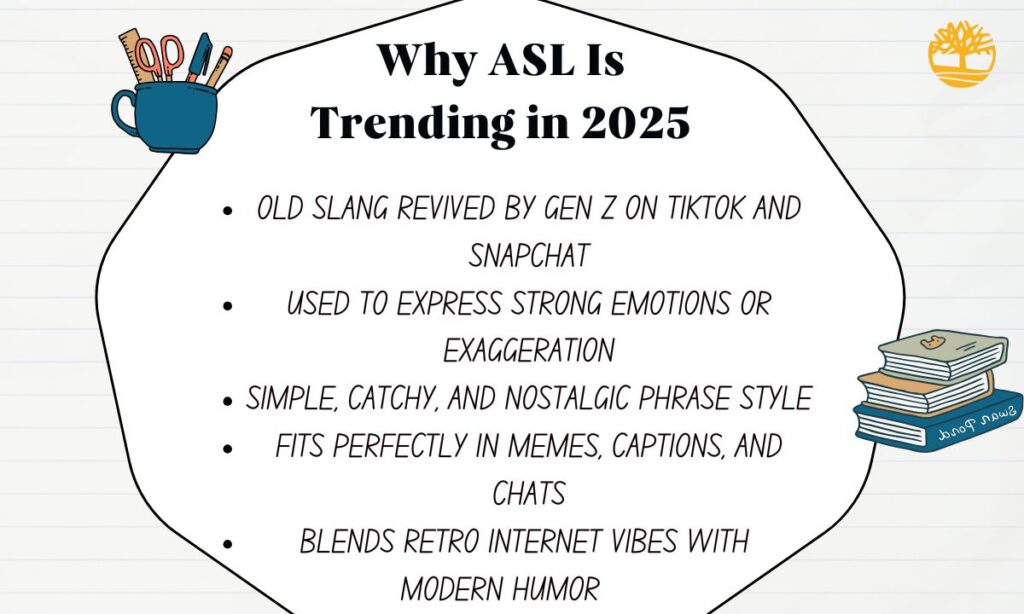
Social media has a habit of bringing back old trends, and ASL is one of them. What started in early chatrooms has now become a favorite part of Gen Z slang. It’s short, expressive, and fits perfectly into memes and captions.
The charm lies in its versatility. Whether you use it to describe your mood or for humor, “asl” adds flavor to any post. It feels nostalgic for older users and cool for younger ones.
Platforms like TikTok, Instagram, and Snapchat keep the term alive by giving it new meaning every year. It’s a perfect mix of old-school internet and modern creativity.
Common Examples of ASL in Conversation
“asl” appears in daily chats and online comments more than ever. People use it to emphasize emotions or reactions in a playful, informal way. It’s part of how we communicate feelings quickly.
Here are a few popular examples:
- “He’s annoying asl.”
- “asl?? bruh I just asked your pronouns 💀”
- “That song was good asl.”
These short phrases show how “asl” blends humor and exaggeration. It’s quick, expressive, and fits today’s texting habits perfectly.
Why Should You Learn ASL?
Learning ASL — American Sign Language — is more than just picking up another language. It’s a way to connect with the Deaf and Hard-of-Hearing community and promote inclusivity.
It helps bridge communication gaps and increases awareness about different ways people express themselves. ASL is also valuable in careers like education, healthcare, and interpreting.
Beyond practical use, learning ASL builds empathy, improves communication skills, and helps create a more inclusive world.
Frequently Asked Questions
What does ASL stand for?
ASL can mean Age, Sex, Location, As Hell, or American Sign Language, depending on how it’s used in a conversation.
Is ASL still used seriously?
Not really. It’s mostly seen in casual slang or as a throwback to early internet chatrooms.
Is ASL appropriate to use?
Yes, it’s fine in casual chats or social posts, but avoid using it in formal, professional, or sensitive settings.
Conclusion
ASL has come a long way from its chatroom origins to become part of modern slang and digital culture. Its meaning shifts with context — from “Age, Sex, Location” to “As Hell” or “American Sign Language.” The key is understanding the tone and platform where it’s used.
Whether it’s in a TikTok caption or a conversation about accessibility, ASL continues to reflect how online language evolves with time. In short, ASL is more than just letters — it’s a symbol of how communication adapts, connects, and keeps the internet fun.

Muhammad Shoaib is a seasoned content creator with 10 years of experience specializing in Meaning and Caption blogs. He is the driving force behind ExactWordMeaning.com, where he shares insightful, clear, and engaging explanations of words, phrases, and captions.