In today’s online world, the word “unhinged” shows up everywhere—from viral memes to intense movie reviews. It’s used to describe moments, moods, and people that feel wildly out of control. This bold, dramatic term has become a modern favorite, capturing the chaotic energy of our times.
What Does “Unhinged” Mean?
When we hear the word “unhinged,” it often paints a picture of something or someone that’s lost stability. In modern language, it goes beyond describing mental imbalance—it captures moments when emotions or behaviors go off balance. People use it casually to highlight reactions that feel extreme or unpredictable.
In pop culture and conversation, calling someone “unhinged” doesn’t always mean they’re mentally ill. It can be a way of pointing out chaotic or bold behavior that stands out from the norm. From social media rants to shocking celebrity moments, the term has become a way to describe raw, unfiltered emotion.
Writers and creators use “unhinged” to bring intensity or drama into a scene. It adds a sense of instability, emotional tension, or rebellion against control. This makes it one of those powerful words that instantly grab attention and emotion.
Example:
- “She laughed through her tears in a way that was beautifully unhinged.”
- “After losing the game, his reaction was completely unhinged—anger mixed with disbelief.”
Origin and Word History of “Unhinged”
The word “unhinged” comes from the verb “to unhinge,” meaning to remove something from its hinges, like a door or gate. When the hinge is gone, the door loses balance—just like a mind that’s lost its stability. This powerful image gave rise to the figurative sense of emotional or mental disarray.
The first known use of “unhinged” dates back to the 17th century, later evolving into a psychological description in the 19th century. Early literature used it to describe minds that had come “loose” from reason or control. It soon became part of emotional vocabulary, blending poetic and medical tones.
Over time, “unhinged” gained versatility, appearing in both serious and casual language. Its vividness made it perfect for expressing everything from breakdowns to wild creativity. The modern sense embraces that tension between madness and brilliance.
“Her mind was unhinged by grief, yet her words carried the wisdom of pain.”
Psychological Meaning of Being Unhinged
In psychology, being “unhinged” relates to emotional dysregulation—difficulty managing reactions or impulses. It often involves intense responses to everyday stress, shifting moods, and heightened sensitivity. These individuals may feel overwhelmed by emotions that others can manage with calm.
It’s not always about rage or chaos; sometimes, the instability shows through silence, avoidance, or passive aggression. Emotional unsteadiness can wear down relationships and self-esteem.
Without awareness, it becomes a cycle of reaction and regret.Psychologists see “unhinged” traits as signals of deeper emotional struggle, not just dramatic behavior. They may stem from trauma, stress, or personality disorders. Understanding this pattern helps others respond with empathy, not judgment.
- Overreactions to minor setbacks like late replies or small disagreements.
- Emotional highs followed by sudden withdrawal or despair.
- Difficulty accepting responsibility or hearing constructive criticism.
- Intense attachment or fear of abandonment in relationships.
Common Signs of an Unhinged Personality
Emotionally unhinged people often appear charming at first but later reveal unpredictable sides. Their energy can shift quickly—from affectionate to furious, confident to broken. This constant volatility keeps others guessing, draining trust and emotional safety.
They may always play the victim, turning every conflict into proof of being wronged. This pattern manipulates sympathy while deflecting blame. Over time, their narratives trap others into cycles of guilt and confusion.
Other signs include disregard for boundaries, controlling tendencies, and chaotic relationships. Their world often feels like constant crisis—every event becomes magnified into drama. Being around such energy can leave you emotionally exhausted.
Examples:
- “He texted me 30 times, then blocked me an hour later.”
- “She accused everyone of betrayal when plans changed slightly.”
Literal vs. Figurative Use of “Unhinged”
Literally, “unhinged” means something detached from its hinges—a door swinging loose or falling apart. It’s a physical state of imbalance, easily visualized and understood. This literal meaning gives strength to its metaphorical use.
Figuratively, it represents a mind or emotion disconnected from stability. When someone’s actions no longer align with reason, they’re seen as metaphorically “off their hinges.” The image of a door off balance mirrors a person losing emotional structure.
This dual meaning makes “unhinged” versatile in speech, writing, and art. It bridges physical disarray and psychological chaos, making it deeply expressive in storytelling.
Example:
- Literal: “The old cabinet door was unhinged after years of use.”
- Figurative: “After the argument, his calm demeanor turned unhinged.”
Unhinged in Pop Culture and Social Media
The word “unhinged” has become a social media favorite. People use it humorously to describe wild, unpredictable, or chaotic behavior—especially in memes or dramatic posts. “That video was so unhinged” often means it was outrageously funny or shocking.
In pop culture, it’s used for characters or performances that show extreme passion or instability. From movie villains to bold influencers, the “unhinged” archetype embodies freedom from restraint and convention. It’s chaos turned into charisma.
This new, playful tone doesn’t erase the darker origins of the word—it redefines it. Online, being “unhinged” can even mean being unapologetically authentic, loud, or unfiltered. It’s rebellion dressed as entertainment.
Examples:
- “That celebrity’s award speech was unhinged but iconic.”
- “Her TikTok rants are so unhinged, I can’t stop watching.”
Difference Between Unhinged, Crazy, and Deranged
While these words overlap, each carries a unique tone and intensity. Unhinged suggests emotional imbalance that still allows partial control. Crazy is broader—it can mean wild, fun, or irrational, often used casually. Deranged implies deep psychological disturbance, often dangerous or detached from reality.
“Unhinged” often evokes empathy, hinting at a person struggling beneath the chaos. “Crazy” might sound playful or dismissive depending on context. “Deranged,” however, carries a heavy, serious connotation rooted in mental illness.
Understanding these shades helps you choose words carefully. Language reflects how we perceive emotion and sanity, so precision matters in both conversation and writing.
Comparative examples:
- “She’s unhinged lately—her emotions are all over the place.”
- “That party was crazy—everyone was dancing on tables.”
- “The deranged suspect was taken into custody for public safety.”
Examples of “Unhinged” in Sentences & Conversations
Using “unhinged” in real-life examples helps show how flexible and expressive the word is. It can describe serious mental instability, emotional chaos, or even playful exaggeration. Whether in daily talk or storytelling, it adds intensity and emotion to the sentence.
Examples in sentences:
- “After days without sleep, his thoughts became unhinged and scattered.”
- “She gave an unhinged laugh that made everyone in the room nervous.”
- “The whole situation felt unhinged, like logic had left the building.”
- “Their argument turned unhinged when emotions took over reason.”
In casual conversation, the term often sounds humorous or dramatic. It’s a favorite in social media slang, where users describe something unexpectedly wild or intense. “That clip was totally unhinged” might mean shocking but entertaining.
Conversation examples:
- Alex: “Did you see her reaction to the news?”
Maya: “Yeah, it was completely unhinged. I didn’t expect that.” - Jake: “This show gets crazier every episode.”
Lena: “Right? It’s delightfully unhinged.”
Synonyms and Antonyms for “Unhinged”
The word “unhinged” carries emotional and psychological depth, so its synonyms depend on tone and context. Some are used in a serious mental health sense, while others fit casual or figurative situations. Understanding the nuance helps in choosing the right word.
Synonyms (depending on tone):
- Disturbed, unstable, irrational, demented, deranged, erratic, manic, off-balance, frantic, unsteady.
- Casual tone: wild, chaotic, impulsive, dramatic, over-the-top.
Each synonym adds a slightly different flavor. “Deranged” feels darker and clinical; “chaotic” feels lighter and more playful. “Irrational” fits intellectual discussion, while “manic” adds emotional speed or intensity.
Antonyms for balance:
- Calm, composed, rational, grounded, steady, balanced, sane, peaceful.
“Sanity and madness are not opposites—they dance on the same unhinged floor.”
How to Use “Unhinged” Correctly in Daily Speech
Using “unhinged” effectively depends on tone, intent, and audience. In serious discussions, it should describe true instability or emotional breakdown and casual speech, it can express chaos or exaggeration without offending anyone.
In professional settings, be cautious—calling someone “unhinged” can sound harsh or judgmental. It’s better used for describing behavior, not labeling people. For example, “His outburst felt unhinged” focuses on the action, not the person.
Online, it’s a trending word often used humorously. People describe dramatic videos, unpredictable trends, or even themselves with self-aware humor. It’s become a badge of being raw, passionate, or fearless.
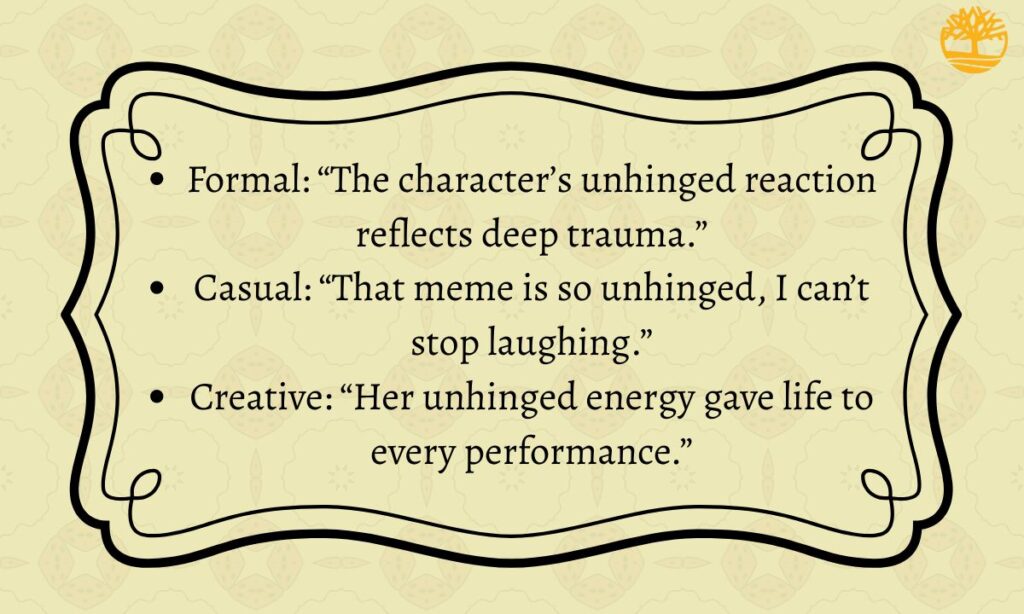
Examples in tone:
- Formal: “The character’s unhinged reaction reflects deep trauma.”
- Casual: “That meme is so unhinged, I can’t stop laughing.”
- Creative: “Her unhinged energy gave life to every performance.”
Unhinged Behavior in Relationships and Emotions
Emotionally unhinged behavior can make relationships unpredictable and exhausting. It often shows up as intense mood swings, overreactions, or emotional manipulation. People caught in this cycle may crave love but fear losing control.
They may create emotional highs followed by cold distance or anger. This instability confuses partners and erodes trust. The person might idealize you one moment and criticize you the next, leaving you constantly off balance.
Psychology links this pattern to attachment insecurity and unresolved trauma. Such individuals seek connection but can’t regulate the fear and intensity that come with it. Their love often feels like chaos instead of comfort.
Common emotional signs:
- Frequent accusations or guilt-tripping.
- Intense affection followed by withdrawal.
- Passive-aggressive communication.
- A need to dominate emotional space.
Quotation:
“Love without control can feel like fire—warm one moment, unhinged the next.”
Popular Quotes and Expressions Using “Unhinged”
The word “unhinged” appears often in literature, film, and online spaces because it captures raw human energy. It symbolizes both madness and freedom—the line between losing control and embracing truth.
Famous and creative expressions:
- “Her beauty was unhinged, wild as a storm in sunlight.”
- “He smiled with an unhinged calm that scared everyone.”
- “This plan is unhinged—and that’s why it might actually work.”
- “An unhinged mind often births the greatest art.”
Modern social media uses it with humor and exaggeration. Phrases like “unhinged energy,” “unhinged rant,” or “unhinged queen” describe chaotic yet entertaining behavior. It’s both a warning and a compliment in today’s slang.
Example in pop tone:
- “That dance routine was completely unhinged, but iconic.”
- “She’s serving unhinged confidence and I love it.”
“The world calls her unhinged; she calls it honesty without filters.”
Final Thoughts
The word “unhinged” perfectly balances between humor and intensity in modern language. It captures moments when emotions overflow or logic slips away. From deep psychological meanings to playful TikTok slang, it reflects both chaos and authenticity. In 2025, calling something “unhinged” often means it’s wildly real, raw, and unforgettable.
Frequently Asked Questions
What does “unhinged” mean in texting?
It usually means someone or something seems wild, extreme, or emotionally out of control—often said playfully online.
Is calling someone unhinged offensive?
It can be if meant seriously, but in casual slang, it’s often used jokingly or with affection.
Can “unhinged” describe objects too?
Yes, it can—like an “unhinged idea” or “unhinged storyline,” meaning it’s wild or chaotic.
What’s the difference between unhinged and insane?
“Insane” is more clinical or harsh, while “unhinged” often sounds dramatic or exaggerated.
When did the word “unhinged” first appear?
It dates back to the 17th century, originally describing something physically “off its hinges” before gaining emotional meaning.

Muhammad Shoaib is a seasoned content creator with 10 years of experience specializing in Meaning and Caption blogs. He is the driving force behind ExactWordMeaning.com, where he shares insightful, clear, and engaging explanations of words, phrases, and captions.